How Do You Trade Futures on OKX for Beginners?
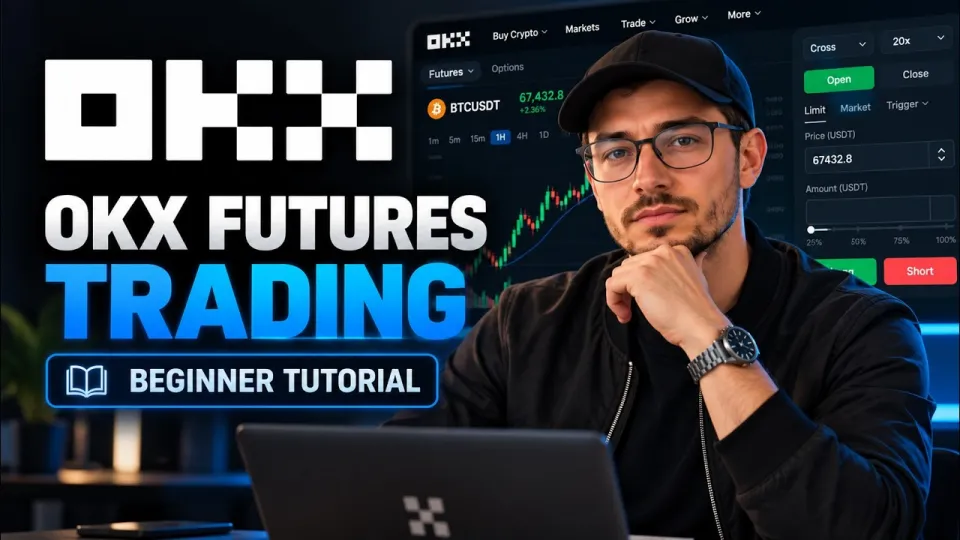
· based on the channel Binances Club
OKX futures trading lets you speculate on cryptocurrency price movements without owning the underlying asset, using leverage to amplify exposure. To start, you move funds to your futures wallet, choose a contract, set leverage and margin mode, then open a long or short position and manage it until you close. Beginners can sign up via the OKX registration link to access the platform and any available welcome bonuses.
What Is OKX Futures Trading and How Does It Work?
OKX futures trading involves contracts that track the price of a cryptocurrency like Bitcoin or Ethereum, settled in crypto rather than delivered physically. Each contract has a fixed value, and your profit or loss depends on the price difference between entry and exit, multiplied by leverage and position size. Unlike spot trading, you don't need to hold the full asset value upfront; instead, you post margin that acts as collateral. OKX offers perpetual futures (no expiry) and dated futures, with perpetual contracts being the most popular for active traders. The exchange provides a dedicated futures workspace where you can view charts, place orders, and monitor your positions in real time.
How to Move Funds to Your OKX Futures Wallet
Before you can trade futures on OKX, you must transfer funds from your main trading account to the futures wallet. Here's how:
- Log in to your OKX account and go to the Assets section.
- Select Transfer and choose your source account (e.g., Funding or Spot) and destination as Futures.
- Enter the amount you want to move and confirm the transfer.
You can also use the quick transfer option within the futures interface. Note that futures trading uses crypto as margin, so you'll need assets like USDT, BTC, or ETH in your futures wallet. Keep in mind that transferring funds between accounts is instant and free on OKX.
How to Set Leverage and Margin Mode on OKX
Leverage on OKX allows you to control a larger position with less capital, but it also magnifies losses. For example, with 10x leverage, a 1% price move in your favor yields a 10% profit on margin; a 1% move against you results in a 10% loss. OKX offers leverage up to 100x for some contracts, but beginners should start with lower leverage (2x–5x) to manage risk. Margin mode determines how collateral is allocated: cross margin uses your entire futures wallet balance to avoid liquidation, while isolated margin limits risk to the specific position. You can adjust both settings in the position opening panel before placing a trade.
What Are the Key Elements of the OKX Futures Interface?
The OKX futures interface is designed to give you a complete view of the market and your positions. The main components include:
- Chart area: Displays price action with customizable indicators and drawing tools.
- Order book: Shows current buy and sell orders for the selected contract.
- Position panel: Lists your open positions, including entry price, liquidation price, and unrealized PnL.
- Order entry panel: Where you set order type (market, limit, stop), leverage, and size.
- Risk management tools: Access to stop-loss and take-profit orders, as well as margin adjustments.
Familiarize yourself with these sections before trading. The chart and trading tools can be expanded for technical analysis, and you can switch between contracts easily using the search bar.
How to Open a Long or Short Position on OKX Futures
Opening a position on OKX futures is straightforward once your funds are in the futures wallet. Follow these steps:
- Choose the futures contract you want to trade (e.g., BTC-USDT perpetual).
- In the order entry panel, select Long if you expect the price to rise, or Short if you expect it to fall.
- Set your leverage and margin mode.
- Choose order type: market order executes immediately at the best available price; limit order lets you specify your entry price.
- Enter the quantity or use the slider to set position size.
- Optionally, add a stop-loss or take-profit order.
- Click Buy/Long or Sell/Short to open the position.
The position will appear in the position panel, showing real-time PnL and liquidation price. You can adjust leverage or add margin later if needed.
How to Properly Close a Trade on OKX Futures
Closing a trade means exiting your position to realize profit or loss. On OKX, you can close a position by clicking the Close button next to it in the position panel, which places a market order to exit at the current price. Alternatively, you can place an opposite order (e.g., a sell order to close a long). For partial closes, adjust the quantity before confirming. It's crucial to monitor your position and close it before liquidation if the market moves against you. Using stop-loss orders can automate this process and protect your capital.
What Risk Management Tools Does OKX Offer for Futures Traders?
OKX provides several risk management tools to help traders control exposure. Stop-loss orders automatically close your position at a specified price to limit losses. Take-profit orders lock in gains at a target price. You can also set liquidation warnings and adjust margin mode to manage risk. Additionally, OKX offers a demo trading environment where beginners can practice futures trading without risking real funds. Always use these tools and never risk more than you can afford to lose, as leverage can lead to rapid losses.
Useful Links
- OKX registration link – sign up and access futures trading with potential bonuses.
Final Thoughts
OKX futures trading offers a powerful way to speculate on crypto prices, but it requires understanding of leverage, margin, and order types. Start with small positions and low leverage, use stop-loss orders, and practice on demo trading if you're new. The video guide by Binances Club walks beginners through the entire process, from moving funds to closing trades. For a smooth start, use the OKX registration link to create your account and explore the futures platform.
Key takeaways
- OKX futures trading requires moving funds from your main account to the futures wallet first.
- Leverage on OKX multiplies both potential profit and loss; a 10x leverage means a 1% price move equals 10% PnL.
- The OKX futures interface includes a position panel, order types, chart tools, and risk management settings.
- Long positions profit from rising prices; short positions profit from falling prices.
- Closing a trade properly means using the close option or placing an opposite order, not just ignoring the position.
Questions & answers
What is the minimum amount needed to start futures trading on OKX?
The minimum amount depends on the contract and leverage. For BTC-USDT perpetual futures, you can start with as little as 1 USDT margin if using high leverage, but it's recommended to start with a larger amount to avoid quick liquidation. Check the contract specifications for exact minimum order sizes.
Can I trade futures on OKX without verification?
OKX requires identity verification (KYC) for most users to access futures trading and withdraw funds. You can sign up and explore the platform, but completing verification is necessary to trade futures and comply with regulations.
What happens if my OKX futures position gets liquidated?
Liquidation occurs when your margin falls below the maintenance margin requirement, and OKX automatically closes your position to prevent further losses. You may lose the entire margin allocated to that position. Using lower leverage and stop-loss orders helps avoid liquidation.
How do I calculate profit or loss on OKX futures?
For a long position, profit = (exit price - entry price) × contract size × number of contracts. For a short position, profit = (entry price - exit price) × contract size × number of contracts. Leverage amplifies both gains and losses, and fees are deducted from your PnL.
Source: OKX Futures Trading or How to Trade Futures on OKX for Beginners · Markdown version